For people who run many Claude Code sessions at once

Every Claude Code session on your Mac, on one page.

See which repo each session is in and whether it's working or waiting for you. Read the whole conversation, answer it, review what it changed, and jump to its terminal. It runs on your machine, from files Claude Code already writes.

The demo is the real interface running on made-up sessions, in your browser.

127.0.0.1:8766
The deck: repos on the left, session tabs and a live chat in the middle, the file explorer and session stats on the right

The problem

Run enough agents in parallel and you become the scheduler for a small team, with no board. Each session lives in a terminal tab. You ask a question in one, switch away, and find the answer twenty minutes later. Finding "the one fixing the retry test" means scrolling through tabs.

The fix

One page that answers three questions at a glance. What sessions exist, and where? Which are working, and which are waiting for me? How do I get to the one I want, right now? Then it lets you talk to any of them without hunting for the tab.

What you get

Every session, with its status

Repos sit on the left, grouped the way your folders are, with favourites pinned. Each repo's sessions are tabs, and each tab has a colour: green live, amber working, red stale, grey closed. Search finds any session in any repo.
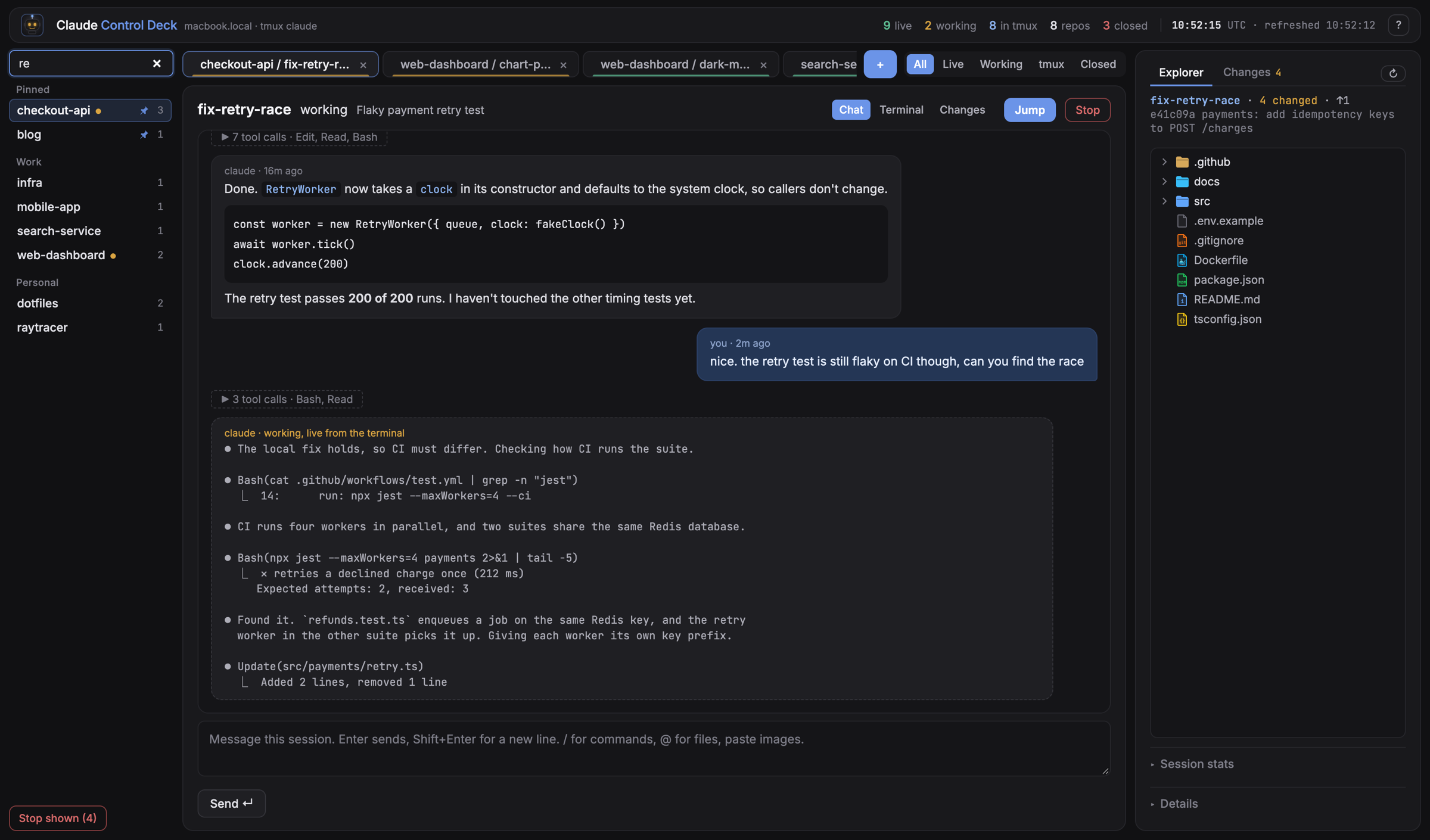
Searching all repos for a session

The conversation, live

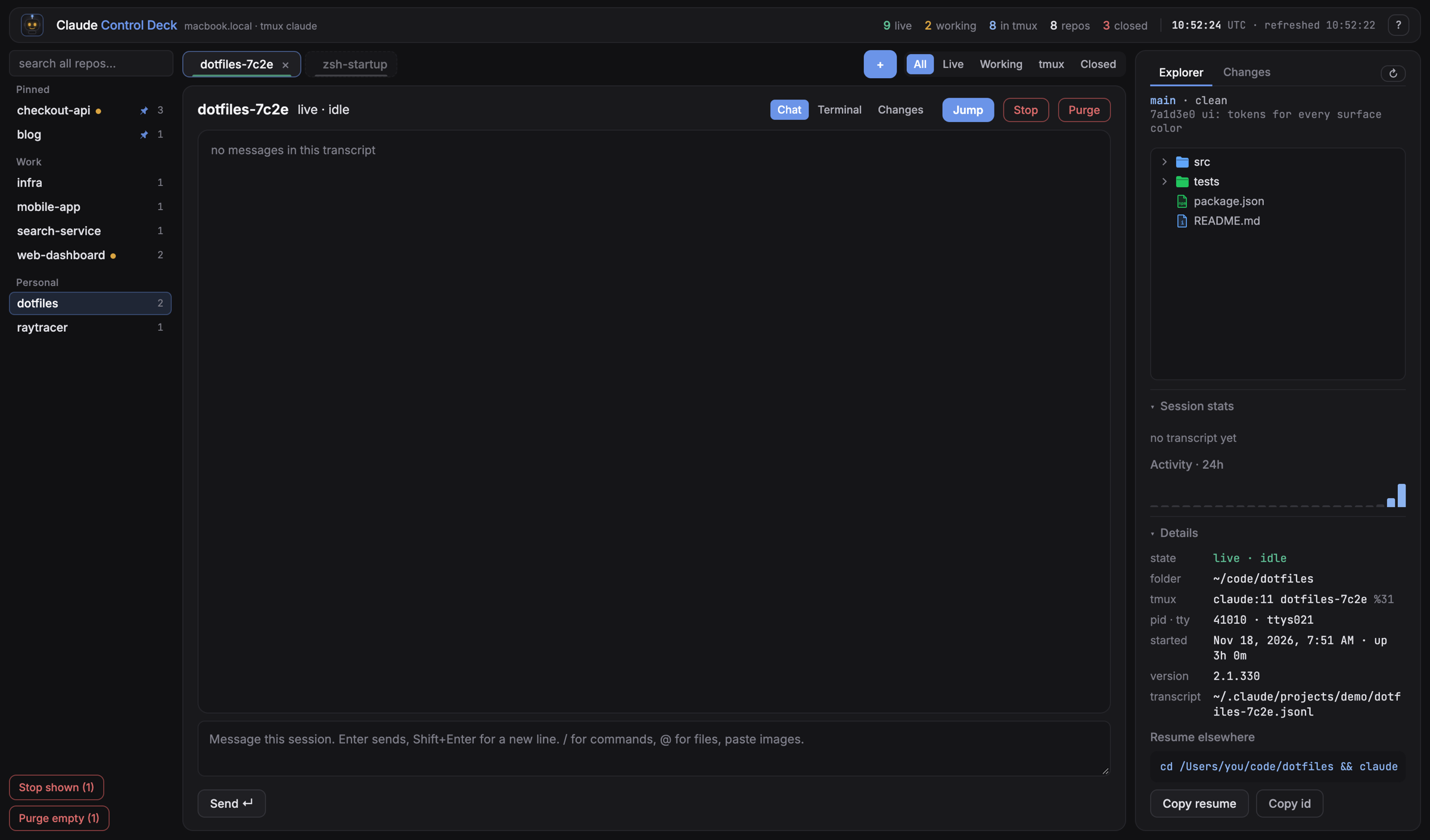
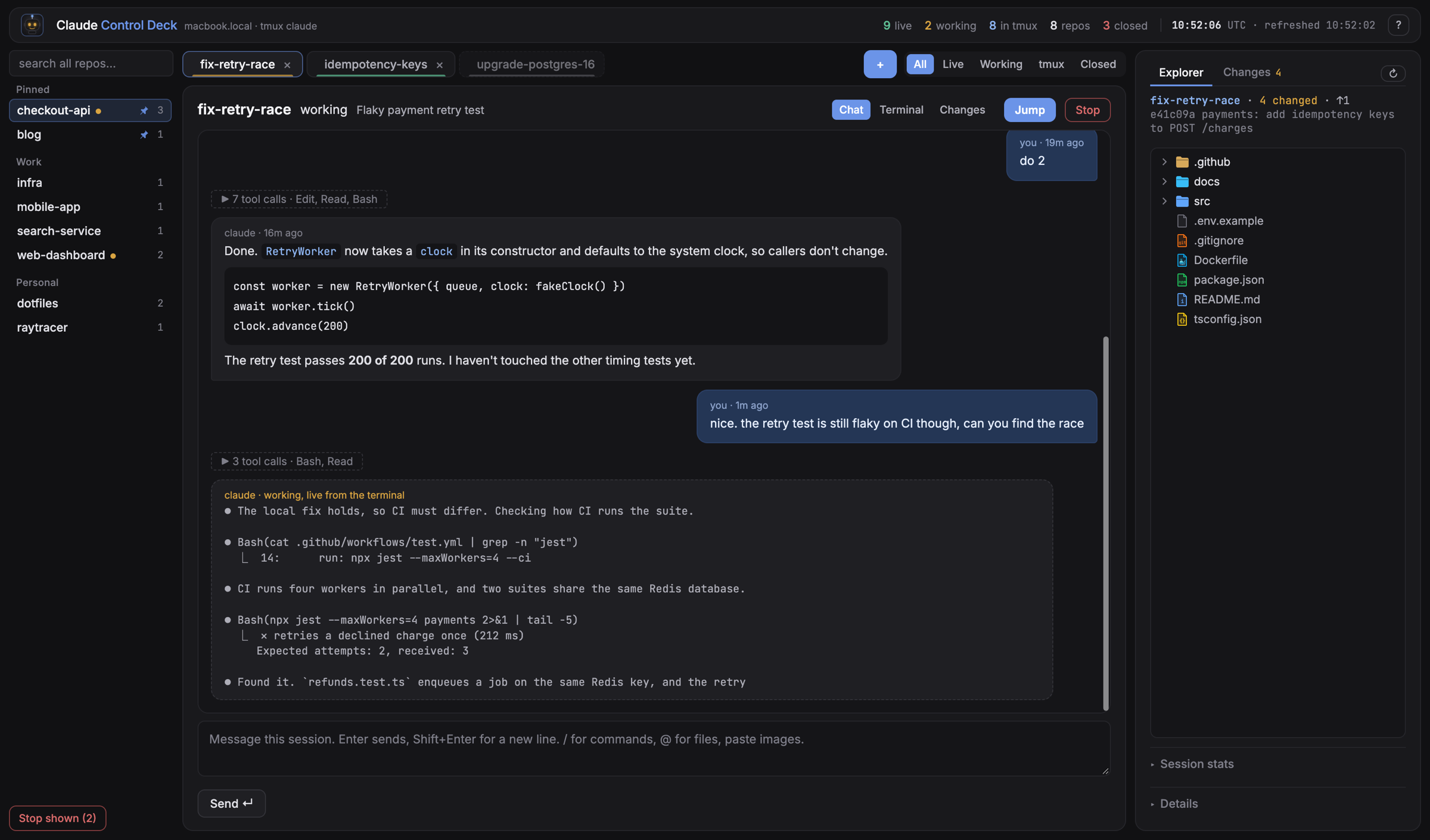
The full chat, with markdown and code rendered. While Claude is working, a live bubble shows what the terminal is printing, so you can follow along without opening it.

A session's chat with a live bubble of terminal output

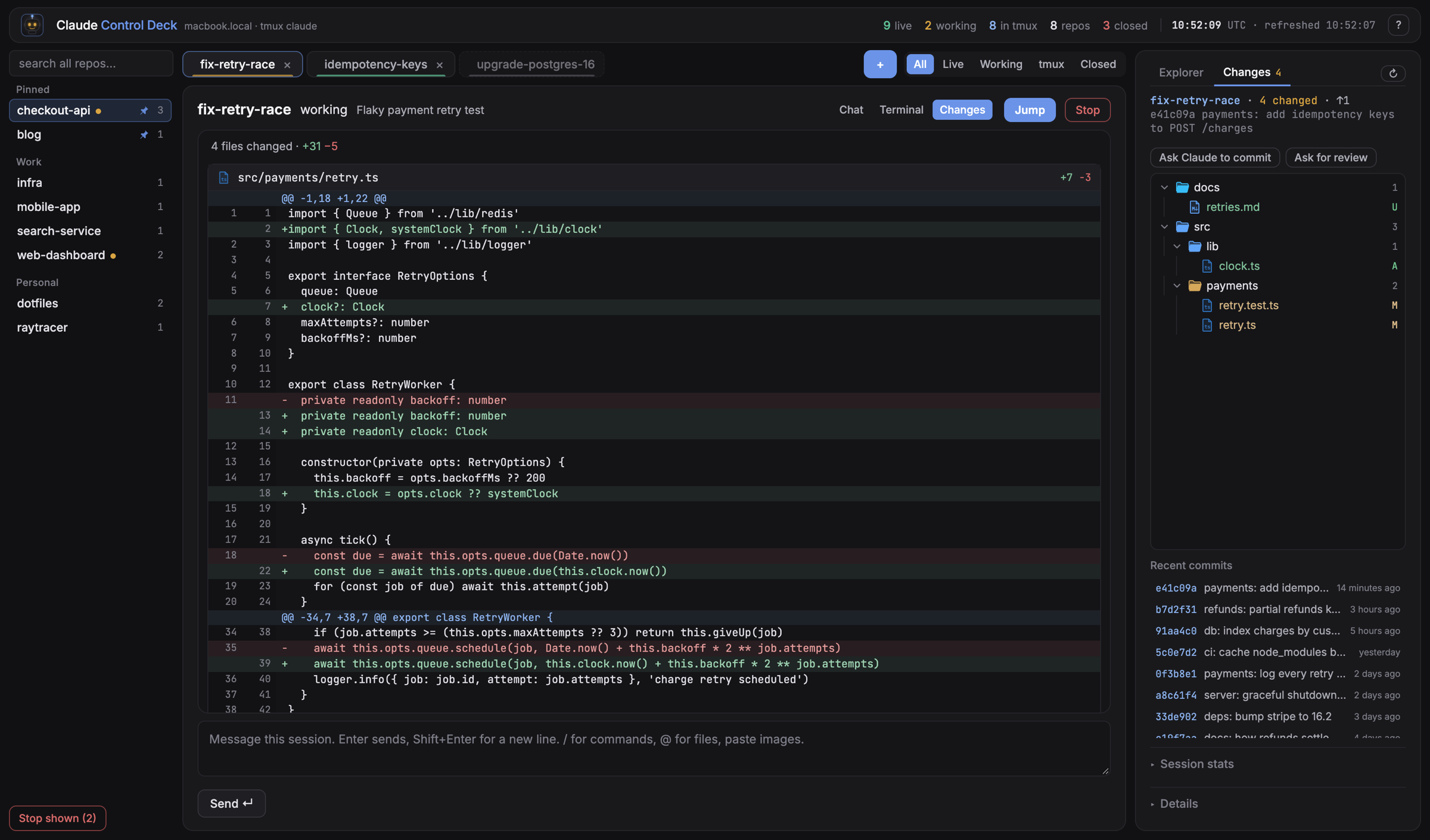
Changes, like a pull request

Every file the session touched, stacked with line numbers and +/− counts, plus a tree of only the changed files. One click asks the session to review its work or commit it.

A diff of all changed files, with a changed-files tree on the right

A composer that works like the prompt

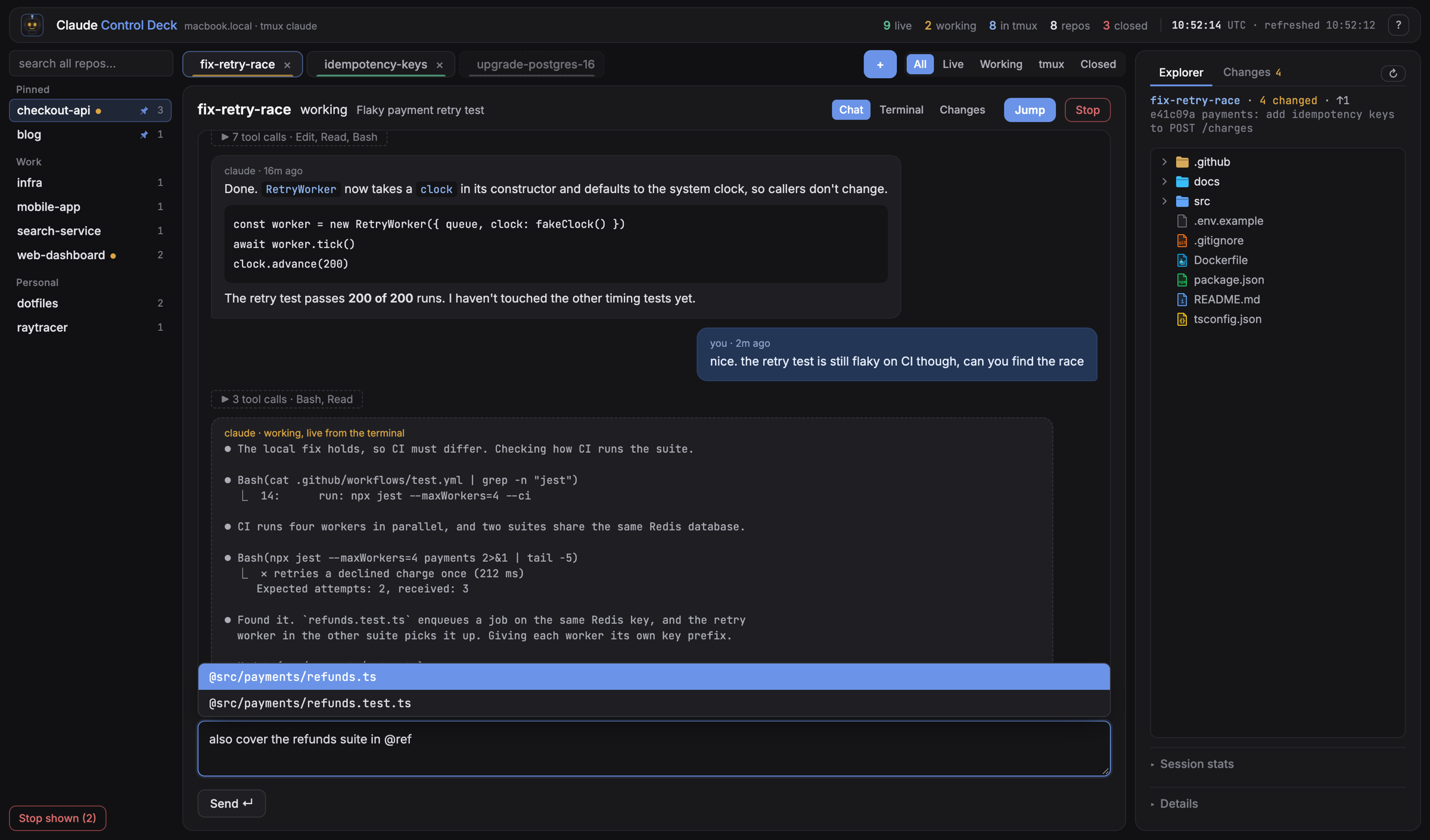
/ completes commands and skills. @ completes files in the repo. Paste or drop a screenshot and it reaches the session as [Image #1], exactly like pasting in the terminal.

File completion after typing @ in the message box

The real terminal, one keypress away

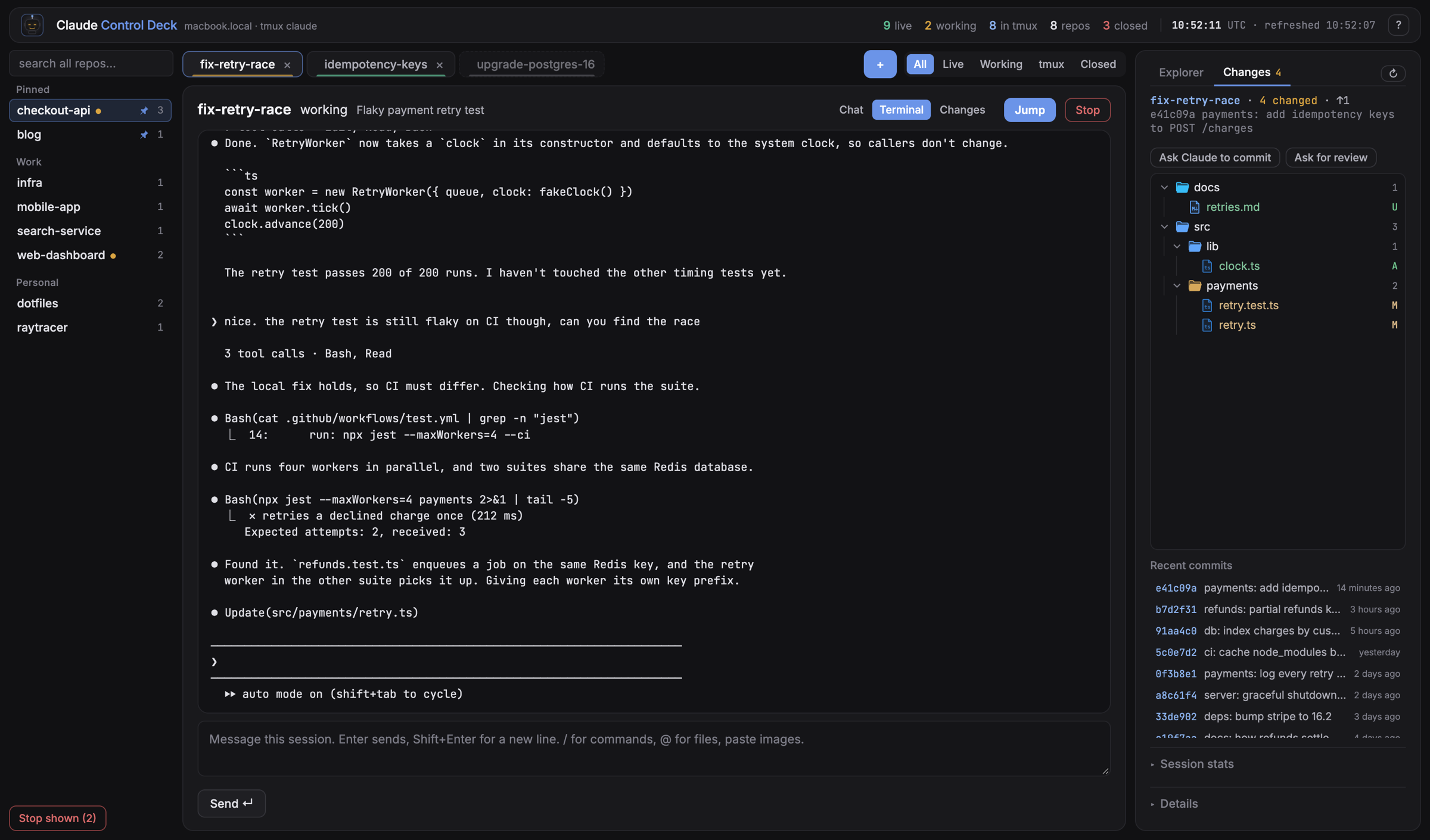
Press t for the session's tmux pane inside the page. Press g to jump to the actual terminal window.

The session's terminal shown inside the page

What each session costs you

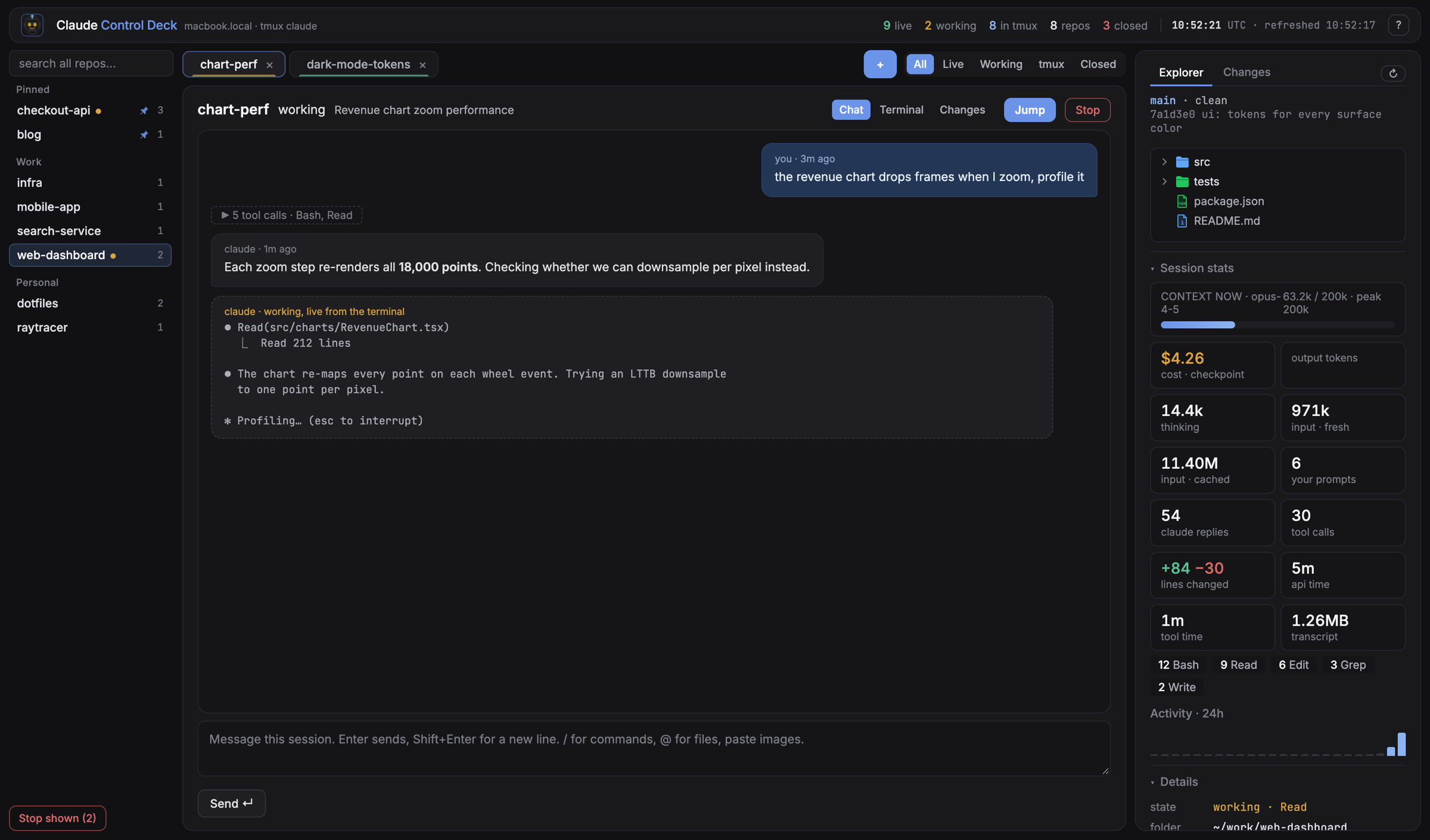
Context window use, cost, tokens, tool calls, lines changed and 24-hour activity, read from the transcript.

Session stats: context, cost, tokens and tool calls
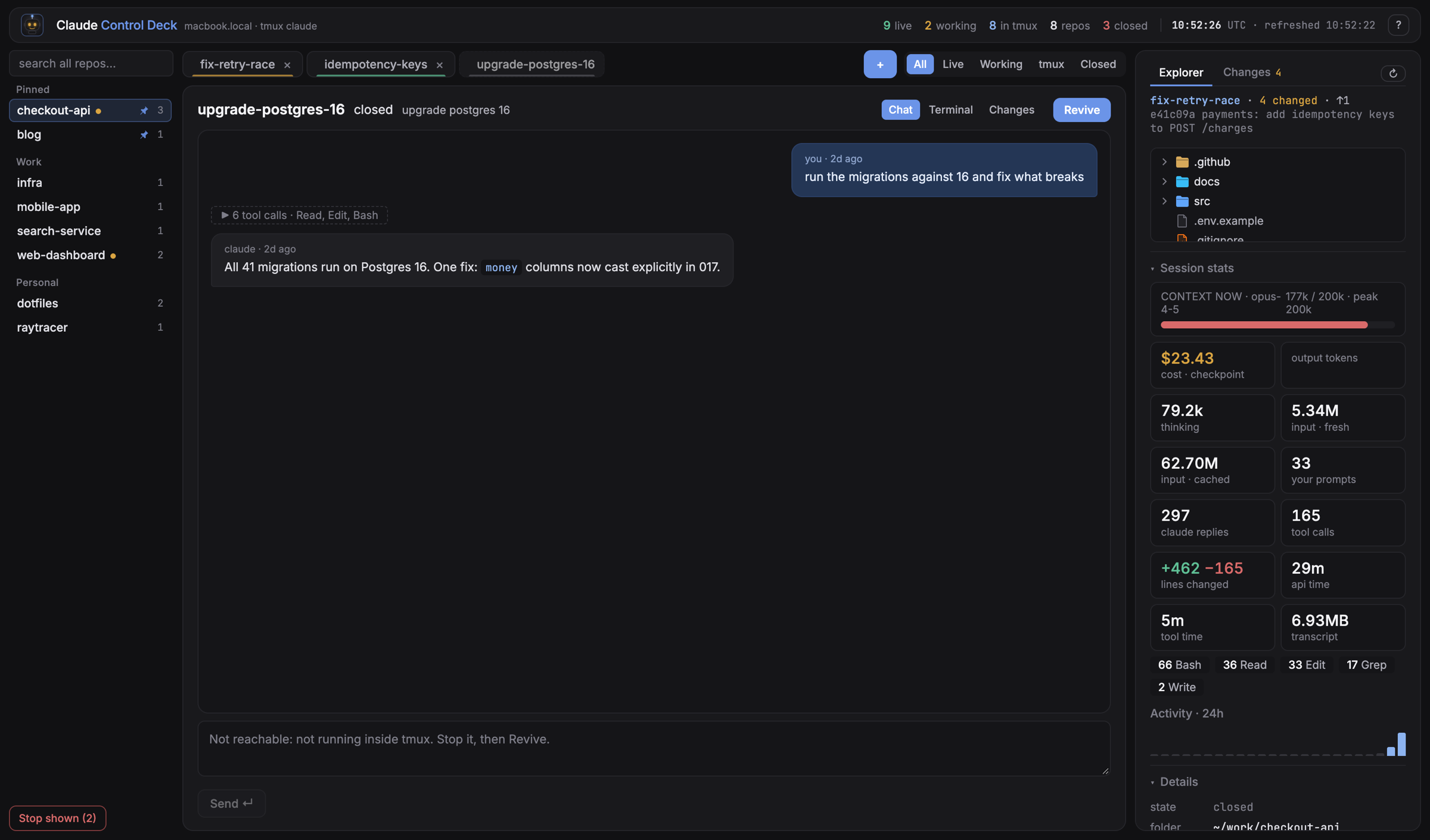
A closed session with a Revive button
Revive a closed session with its full history.
An empty session with a Purge button
Purge sessions that never got a prompt.
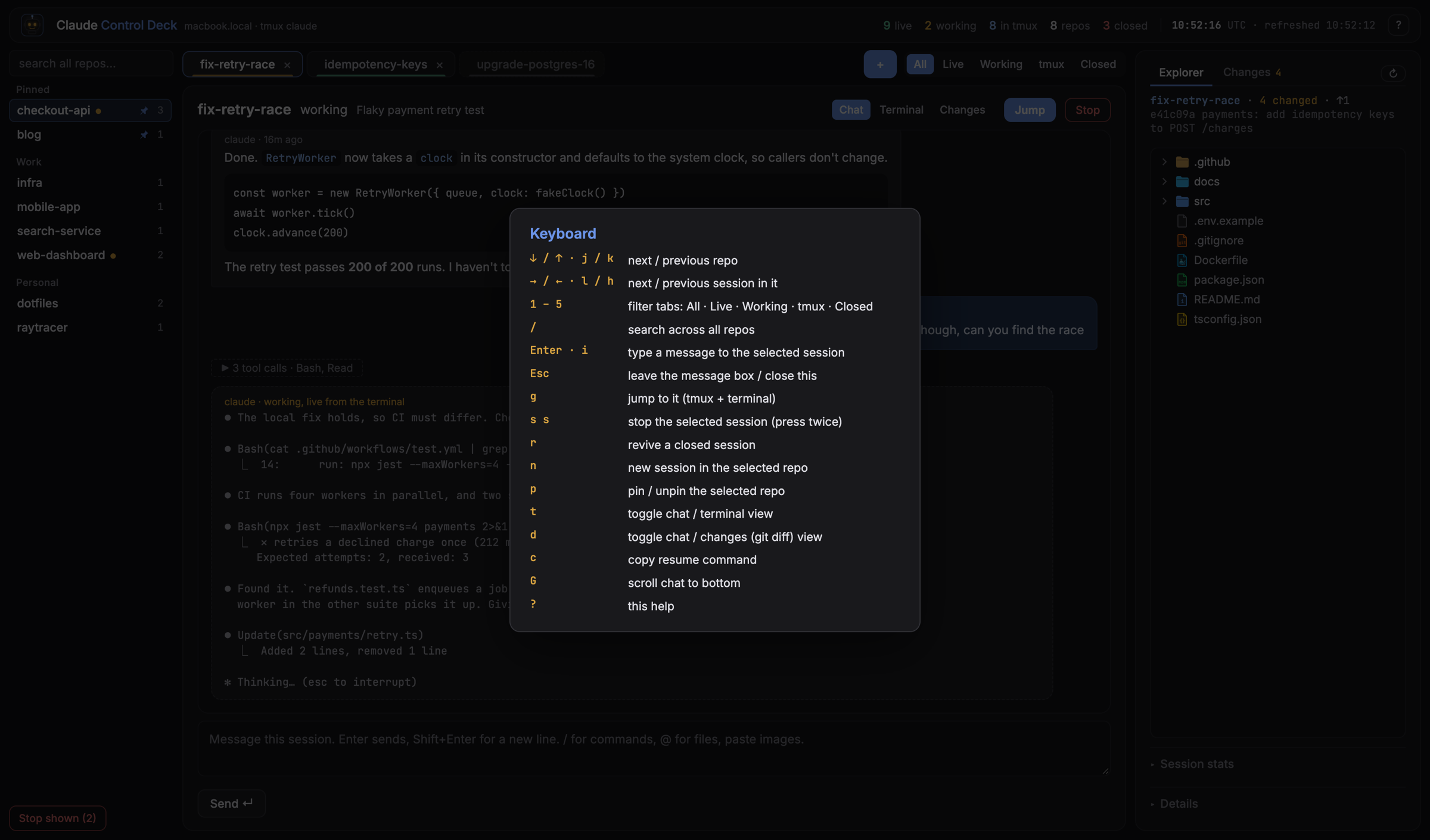
Keyboard shortcuts
Keyboard first. ↑↓ repos, ←→ sessions, n new.

How it works

No plugin, no API key, no changes to Claude Code. Three files and tmux.

Claude Code

already writes

~/.claude/sessions/~/.claude/history.jsonl~/.claude/projects/*.jsonl
→

collector.py

lists sessions, checks each process, finds its tmux pane, reads the end of each transcript

→

server.py

serves the page and a small JSON API on 127.0.0.1

→

index.html

the whole UI, one file, no build step

tmux makes every session reachable

Send a messagetmux send-keys -l "text" then Enter
Live output and terminal viewtmux capture-pane
Jump to a sessiontmux select-window and bring the terminal to the front
Paste an imageput it on the clipboard with osascript, send ctrl+v

Quick start

# macOS, tmux 3.x, Python 3.9+, Claude Code. Nothing to pip install.
git clone https://github.com/kartikpuri95/claude-control-deck.git
cd claude-control-deck
./deck.sh                          # opens http://127.0.0.1:8766

# start sessions inside tmux so the deck can talk to them
ln -s "$PWD/bin/cc" /usr/local/bin/cc
cd ~/code/my-app && cc

Locked to your machine

The server can type into your terminals, so it only listens on 127.0.0.1. It refuses requests from other sites, refuses DNS-rebinding hosts, and requires a custom header and a JSON body on every write. A browser won't send those across origins without asking, and the server never says yes.

Nothing leaves your Mac. There is no telemetry and no account.

A caveat

The files it reads are Claude Code internals, not a public API. An update can change them and break part of the deck.

See it for yourself